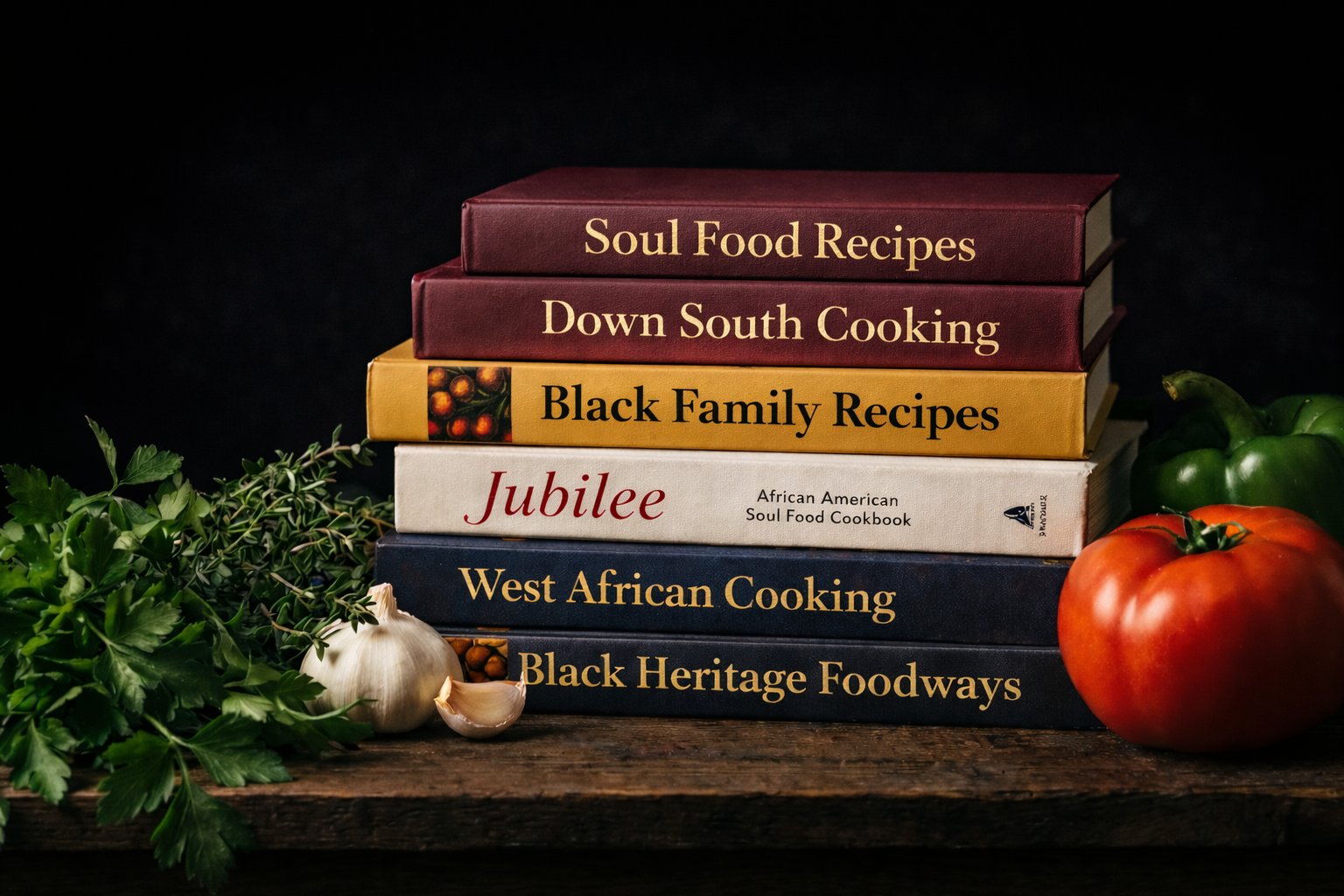
Set the Table
Long before soul food had a name, it had a memory. It lived in the hands of West African women who knew which seeds to plant when the rains came and how to coax flavor from what the land gave them. It crossed the Atlantic in the bodies of stolen people who carried no suitcases but carried everything—knowledge of how to grow rice in standing water, how to turn the toughest cut of meat into something that could feed a family, how to make okra thicken a pot of nothing into something worth sitting down for. That knowledge did not die on the auction block. It survived the Middle Passage, survived the plantation, survived Jim Crow, survived the Great Migration, and it is alive right now in every Black kitchen where somebody is standing over a stove doing exactly what their grandmother did, whether they know the history behind it or not.
This is not a casual story. This is a story about power. For four hundred years, Black hands have planted, harvested, cooked, and served the food that built this nation, and for most of those four hundred years, the people who did that work received no credit, no compensation, and no recognition. The enslaved chef Hercules, who cooked for George Washington, produced meals so extraordinary that Philadelphia’s elite would have paid a fortune for his talents—yet he remained the legal property of a man who rotated him back to Virginia every six months to prevent the state of Pennsylvania from setting him free. James Hemings, who Thomas Jefferson sent to Paris to learn French culinary technique, became one of the most skilled chefs in America and had to negotiate for his own freedom in exchange for training his replacement. These are not footnotes. These are founding stories of American cuisine that have been deliberately buried.
The scholars, historians, and food writers gathered in this library have spent their careers pulling those stories out of the ground. Dr. Jessica B. Harris, the grande dame of African American culinary history, has traced the foodways of the African diaspora across twelve books and helped the world understand that soul food did not begin in the American South—it began in Senegal, in Benin, in the Gambia, in every West African community where cooking was an act of cultural preservation. Michael W. Twitty took that scholarship into the field, literally picking cotton and cooking over open flame on former plantations to reconstruct what enslaved cooks actually experienced. Adrian Miller walked into 150 soul food restaurants across 35 cities and read 3,500 oral histories of formerly enslaved people to write the definitive account of how this cuisine traveled and transformed. Toni Tipton-Martin collected more than 450 African American cookbooks and proved, page by page, that the stereotype of the intuitive, untrained Black cook was always a lie designed to erase Black culinary genius.
And it is not just about what happened in the kitchen. Fannie Lou Hamer, who most people know as a voting rights hero, understood that food was freedom. In 1969, she bought forty acres of Mississippi Delta land and built the Freedom Farm Cooperative, feeding 1,500 families through community gardens and a pig bank because she knew that hungry people cannot fight for their rights. George Washington Carver, born into slavery, revolutionized Southern agriculture by teaching poor Black farmers how to restore depleted soil through crop rotation with peanuts and sweet potatoes—developing over 300 products from the peanut alone and lifting entire communities out of poverty in the process.
These are the stories that belong on your plate alongside the food. The resources below will take you deeper into this history than any single website can. You will find the scholars who have dedicated their lives to this work, the documentaries that bring it to life on screen, the historic figures whose contributions have been systematically erased, and the academic research that connects what we eat today to the foodways of West Africa. This is a starting point, not a finish line. I encourage you to read, watch, and then keep digging on your own. The history of Black cooking is the history of Black survival, Black innovation, and Black genius—and it belongs to all of us.
Explore the resources below. Follow the links. Buy the books. Watch the films. Then pass the knowledge on.
Original Research
Educational materials. These documents are protected and available for on-site reading only. Click “Read Now” to open any document.
The Black Plate: Soul Food’s Long March to Freedom
The definitive companion document tracing Black food culture from West Africa through the Middle Passage, slavery, Jim Crow, the Great Migration, and into the modern era of Black food entrepreneurship.
From Africa to America: The Roots of Soul Food
Traces the direct culinary lineage from West African foodways across the Atlantic, documenting how enslaved Africans preserved their agricultural knowledge and cooking traditions in the New World.
Soul of the Movement: Food & Civil Rights
Examines the critical role of food in the Civil Rights Movement, from church kitchen strategy sessions to the Black Panther Party’s Free Breakfast for Children Program that fed tens of thousands daily.
Freedom Farm Cooperative: Fannie Lou Hamer’s Legacy
The story of Fannie Lou Hamer’s 640-acre Freedom Farm Cooperative in the Mississippi Delta—how she fed 1,500 families through community gardens and a pig bank, proving food sovereignty is inseparable from political freedom.
Gullah Geechee Foodways: The Soul of the Sea Islands
Documents the foodways of the Gullah/Geechee people of the Sea Islands—descendants of enslaved West Africans who maintained African culinary practices, including benne (sesame) cultivation and rice culture, for over 300 years.
The Soul Food Economy: Black Food Entrepreneurship
Analyzes the economic landscape of Black-owned food businesses, from post-Reconstruction restaurant owners to modern entrepreneurs, and the systemic barriers they continue to overcome.
Black Veganism as Political Resistance and Decolonial Practice
Explores the growing Black vegan movement as a form of decolonial resistance, reconnecting with pre-slavery African plant-based foodways while addressing modern health disparities in Black communities.
The Color of Class: The Stigma of Yellow Cornmeal
How a simple ingredient became a powerful symbol of class, race, and regional identity—from the Southern cornmeal hierarchy to the Great Migration’s culinary cost.
Crimson Heritage: The Symbolism of Red in Soul Food
Explores the deep cultural significance of red foods and beverages in the African American culinary tradition—from red drink to red velvet cake—and their roots in West African spiritual practices.
Food Historians & Scholars
The scholars who have dedicated their careers to documenting, preserving, and amplifying Black culinary history.
Dr. Jessica B. Harris
The world’s leading authority on the foodways of the African diaspora. Professor Emerita at Queens College/CUNY, James Beard Lifetime Achievement Award winner, and author of High on the Hog, the basis for the acclaimed Netflix series.
Michael W. Twitty
James Beard Award–winning author of The Cooking Gene and Koshersoul. Founded Afroculinaria, the first blog devoted to historic African American foodways. Reconstructs enslaved cooking traditions through hands-on plantation interpretation.
Adrian E. Miller
Author of Soul Food, The President’s Kitchen Cabinet, and Black Smoke. Former Clinton White House advisor turned culinary historian. Visited 150 soul food restaurants and read 3,500 slave narratives for his research.
Dr. Psyche Williams-Forson
Author of Eating While Black (2023 James Beard winner) and Building Houses Out of Chicken Legs. Leading researcher on the intersections of food, race, gender, and power in African American life.
Toni Tipton-Martin
Author of The Jemima Code, Jubilee, and Juke Joints, Jazz Clubs, and Juice. Julia Child Award recipient. Has collected over 450 African American cookbooks spanning two centuries.
Dr. Frederick Douglass Opie
Author of Hog and Hominy: Soul Food from Africa to America and Zora Neale Hurston on Florida Food. Specializes in the food of people of African descent throughout the Americas.
Historic Figures in Black Food
The pioneers, farmers, chefs, and activists whose contributions to American food culture have been systematically erased.
George Washington Carver
Born into slavery, Carver developed over 300 products from peanuts and hundreds more from sweet potatoes at Tuskegee Institute. Revolutionized Southern agriculture by teaching crop rotation to impoverished Black farmers.
Fannie Lou Hamer
Founded the Freedom Farm Cooperative in 1969 on 40 acres of Mississippi Delta land, eventually growing to 640+ acres. Fed over 1,500 families and proved that food sovereignty is inseparable from political freedom.
Hercules Caesar
One of the most renowned chefs in 18th-century America. Washington rotated him back to Virginia every six months to prevent Pennsylvania law from granting his freedom. He escaped on Washington’s birthday in 1797.
James Hemings
Sent to Paris to master French culinary technique, Hemings became one of the most accomplished chefs in America. Credited with introducing mac and cheese and crème brûlée to the American table. Negotiated his freedom in exchange for training his replacement.
Edna Lewis
Known as the “Mother of Soul Food.” Her cookbook The Taste of Country Cooking is one of the most influential American cookbooks of the past century. She championed seasonal, farm-to-table Southern cooking decades before it became fashionable.
Abby Fisher
Author of What Mrs. Fisher Knows About Old Southern Cooking (1881), one of the oldest known cookbooks by an African American. Won awards at the San Francisco Mechanics’ Institute fairs for her pickles, preserves, and sauces.
Leah Chase
For over 70 years, Chase ran Dooky Chase’s Restaurant in New Orleans, which served as a gathering place for civil rights leaders. She fed Freedom Riders, hosted strategy meetings, and earned the title “Queen of Creole Cuisine.”
Rufus Estes
Born into slavery in Tennessee, Estes became a renowned Pullman car chef and published Good Things to Eat in 1911—one of the first cookbooks by an African American man, documenting the sophistication of Black professional cooking.
Georgia Gilmore
Organized the “Club From Nowhere,” an underground network of Black women in Montgomery, Alabama, who cooked and sold food to secretly fund the Montgomery Bus Boycott. Her kitchen was a command center for the civil rights movement, and her testimony in Dr. King’s trial helped legitimize the boycott. She proved that Black women’s cooking was not just nourishment—it was revolution.
Culinary Glossary: The Language of Soul Food
Essential terms rooted in African, Caribbean, and Southern American culinary traditions. Many of these words crossed the Atlantic with enslaved Africans.
Essential Reading List
The books that have shaped our understanding of Black food culture, history, and resistance. Start here.
High on the Hog
The Cooking Gene
Soul Food: The Surprising Story of an American Cuisine
The Jemima Code
The Taste of Country Cooking
Eating While Black
Hog and Hominy
Black Smoke: African Americans and the United States of Barbecue
Jubilee: Recipes from Two Centuries of African American Cooking
What Mrs. Fisher Knows About Old Southern Cooking (1881)
Yes, Chef: A Memoir (2012)
Black Food: Stories, Art, and Recipes from Across the African Diaspora (2021)
Organizations & Archives
Institutions preserving, researching, and advancing Black food culture and history.
Smithsonian NMAAHC
The National Museum of African American History and Culture’s permanent collection explores how enslaved Africans brought planting and cooking techniques across the Atlantic.
Explore →Southern Foodways Alliance
Documents and celebrates the diverse food cultures of the American South with extensive oral history archives, films, and publications centering Black food traditions.
Explore →Feast Afrique Digital Library
A free library of nearly 250 digital books exploring West African food influence on culinary cultures worldwide. Includes historic cookbooks and cultural studies.
Browse Library →Oldways African Heritage Diet
Promotes the healthful, traditional foods of the African diaspora. Features the African Heritage Diet Pyramid and research connecting African foodways to health.
Explore →CIA African Diaspora Foodways Initiative
Led by Dr. Jessica B. Harris, this initiative researches and documents culinary traditions of the African diaspora through academic symposia and archival collections.
Learn More →University of Alabama African American Cookbook Collection
The largest known collection of African American cookbooks, spanning from the 19th century to the present. An essential resource for culinary researchers.
Explore →Essential Documentaries & Film
Films that bring the history of Black food culture to life on screen.
High on the Hog: How African American Cuisine Transformed America
Based on Dr. Jessica B. Harris’s landmark book. Food writer Stephen Satterfield traces the journey from Benin to the American South. Peabody Award nominated.
Finding Edna Lewis
Documentary tracing Edna Lewis from her childhood in the all-Black farming community of Freetown, Virginia to her rise as one of the most influential American chefs.
Soul Food Junkies
Filmmaker Byron Hurt examines the soul food tradition through the lens of his father’s health crisis, exploring the complex relationship between African Americans and the cuisine that defines their culture.
Fannie Lou Hamer’s America
Explores Hamer’s life and the Freedom Farm Cooperative. How she used agriculture and food sovereignty as tools for political empowerment in the Mississippi Delta.
The Black Panthers: Vanguard of the Revolution
Documents the Black Panther Party’s Free Breakfast for Children Program, which fed tens of thousands of children daily and forced the federal government to expand school breakfast programs.
No Passport Required
James Beard Award–winning chef Marcus Samuelsson travels across American cities exploring the rich diversity of immigrant food traditions—from West African soul food in Houston to Haitian cuisine in Miami to Ethiopian cooking in Washington, D.C. A vibrant portrait of how food connects communities.